
Interview with The New Arab
On the anti-execution protests in Isfahan

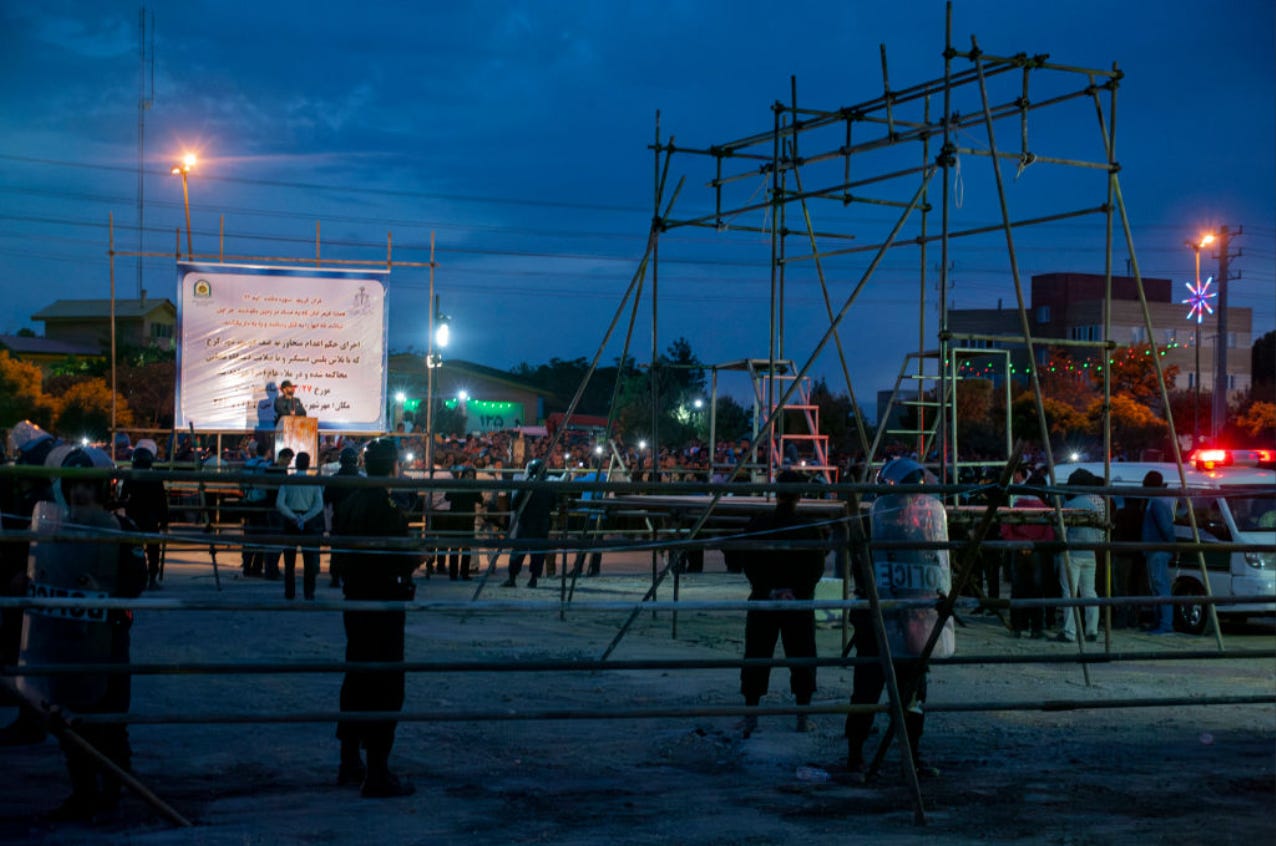
I gave an interview to The New Arab published on Wednesday 29 July 2026 on the anti-execution protests in Isfahan, Iran.
You can read my full responses to The New Arab interviewer’s question, which were not included in their entirety in the final article, below:
The Iranian public remains defiant against the Islamic Republic, despite enduring one of the largest massacres in the nation’s history (with estimates of protestors killed ranging from thousands on the low end to tens of thousands on the high end), as well as two wars in the space of less than a year.
The Islamic Republic has had a high execution rate since its founding, both per capita and in absolute terms (with estimates of those executed often only second to China). But executions have ballooned from the low hundreds in the early-2020s to an estimated 2000+ last year - a dramatic escalation. Unfortunately, I think this figure could be even higher this year.
The regime is using executions as a blunt instrument to deal with social problems, as well as a tool of terror to suppress widespread political discontent, particularly the cyclical large-scale popular uprisings the country has experienced since 2017/18 - four major uprisings over eight years, averaging one every two years (if not for the Covid pandemic lockdowns, the gap between protests might have been even smaller). These protests reflect a perception of the political illegitimacy of the Islamic Republic among much of the public, as well as its economic failure.
The protests in Isfahan illustrate the ongoing defiance of the population, despite the difficult and dangerous conditions they face. I don’t expect another popular uprising for some time - the regime has the domestic security situation under control for now. But absent a dramatic change of conditions in the country—much improved economy, fewer social restrictions, stabilized security situation—a new window for large-scale popular unrest will eventually open, and if the mainstream opposition repeats its performance from January and has stronger foreign backing, could pose an even greater challenge to the regime.